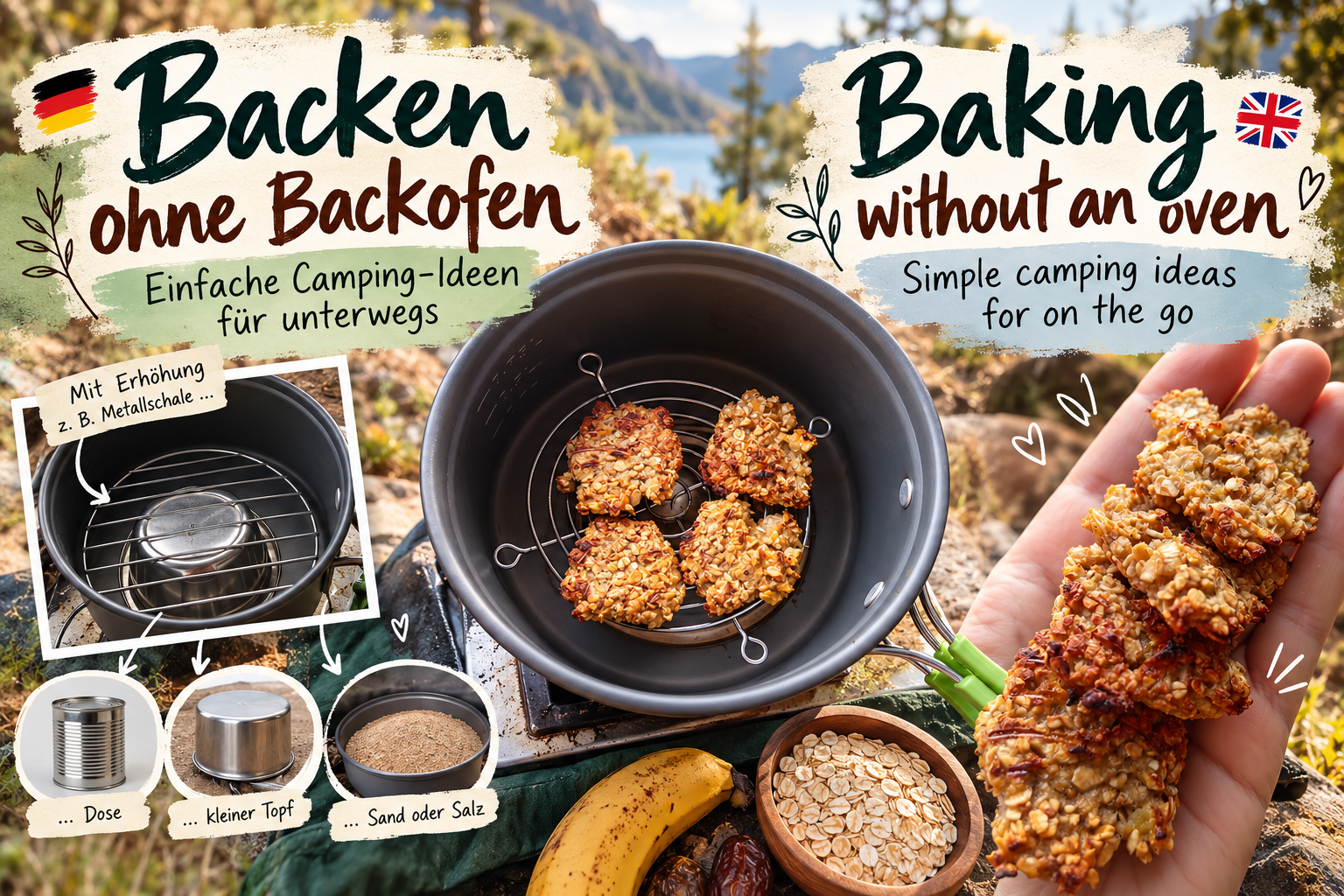
How I used my camping pot, a small metal bowl and a little creativity to bake my first banana oat cookies.
When you travel with a backpack, you quickly learn to be creative. Space is limited, equipment is basic, and you don’t always have the conveniences you are used to at home. But does that mean you have to give everything up?
I wanted to find out whether I could bake something using my camping pot and electric hot plate. So I did some research and looked for a method that would work for me as a backpacker.
During my research, I came across several posts from people in Africa explaining different ways of baking with simple, improvised equipment. I was genuinely happy to find them! It’s great to see how people come up with practical solutions using what they already have instead of buying a special appliance for everything.
So I decided to give it a try myself. For my first experiment, I made simple banana oat cookies. And I was honestly surprised by how well it worked for a first attempt!
My Improvised Camping Oven
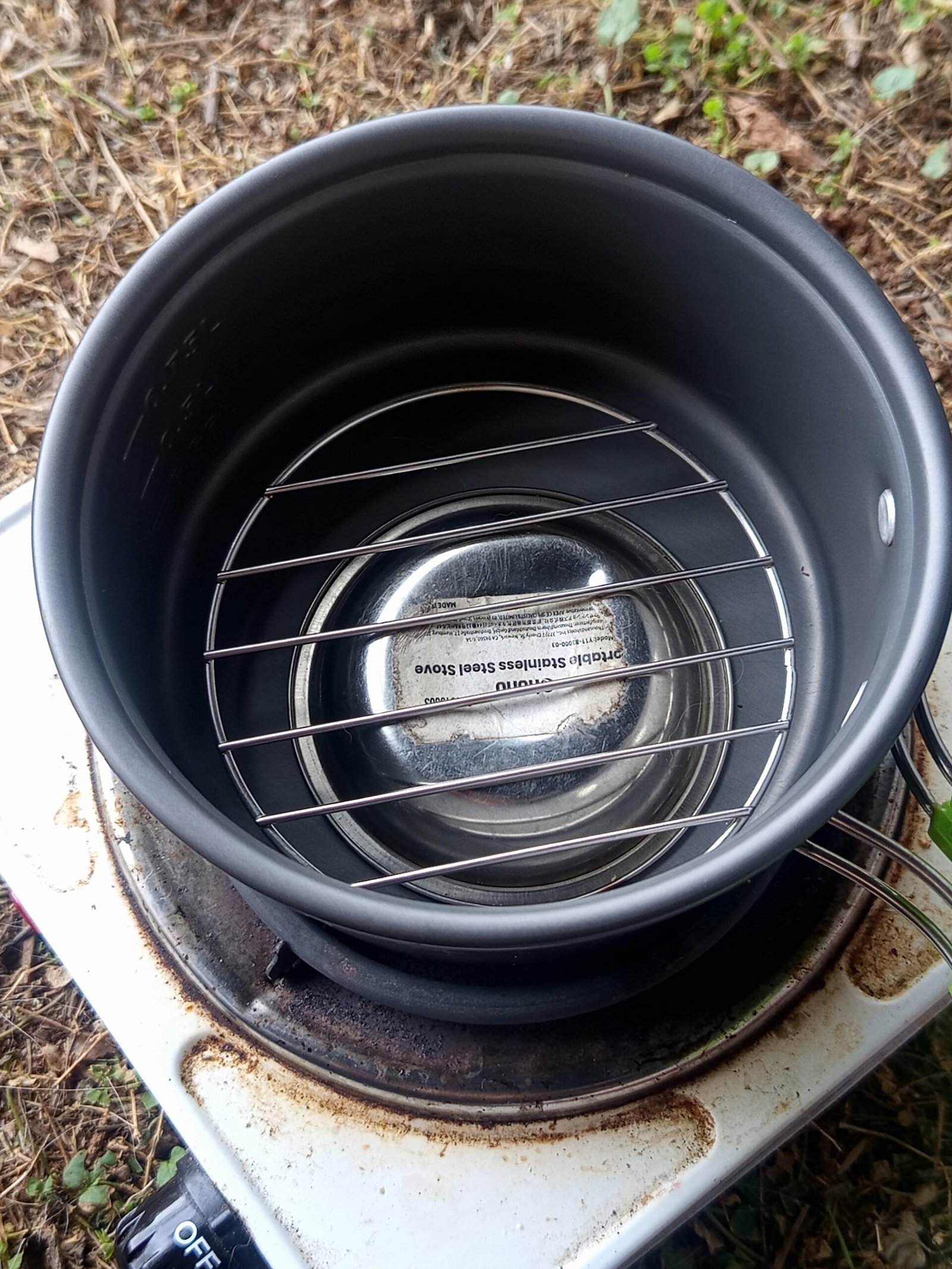
I had a small metal rack that fitted perfectly inside my camping pot. I placed a small metal bowl upside down underneath it. This raised the rack so that it did not sit directly on the bottom of the pot.
And just like that, I had created my own improvised camping oven. The principle is simple: the food should not sit directly on the hot bottom of the pot. Instead, you need a suitable support that raises the rack or baking tin above the bottom. A lid helps trap the heat inside.
You don’t necessarily need a rack. It was simply what I had available. The important thing is to create a gap between the food and the hot bottom of the pot.
If you don’t have a rack, you can place a suitable baking tin on a stable, heat-resistant support. You don’t need to buy special camping equipment for every little thing. Sometimes it is enough to look at what you already have.
What Can You Use to Create the Raised Platform?
This is where a little creativity comes in. As a minimalist traveller, I want to carry as little extra weight and equipment as possible. That’s why I love finding ways to use things I already own.
- A metal rack: This is what I used. The food can sit directly on it, provided the rack is suitable for food contact and the temperatures involved.
- A small metal bowl: Turned upside down, it can act as a support if it is stable and strong enough to hold the setup safely.
- A suitable metal tin: An open, clean, heat-resistant metal tin may work as a support. It must be stable and free from unsuitable coatings or sharp edges.
- A smaller metal pot: If you have a larger camping pot, you may be able to place a smaller, heat-resistant metal pot upside down inside it. A suitable baking tin can then sit on top, provided everything is stable and there is enough room for the heat to circulate.
- Another suitable metal support: Sometimes something in your existing camping cookware can be used for a different purpose.
So, not having a rack does not mean you cannot try this method. You can put the food into a suitable baking tin and place the tin on the raised support. The important thing is that the tin does not sit directly on the hot bottom of the larger pot.
The setup must be stable. Nothing should tip over or shift when you remove the lid. Only use materials suitable for the temperatures involved. Closed containers, plastic parts and unknown coatings should not be used in this setup.
My First Recipe: Banana Oat Cookies
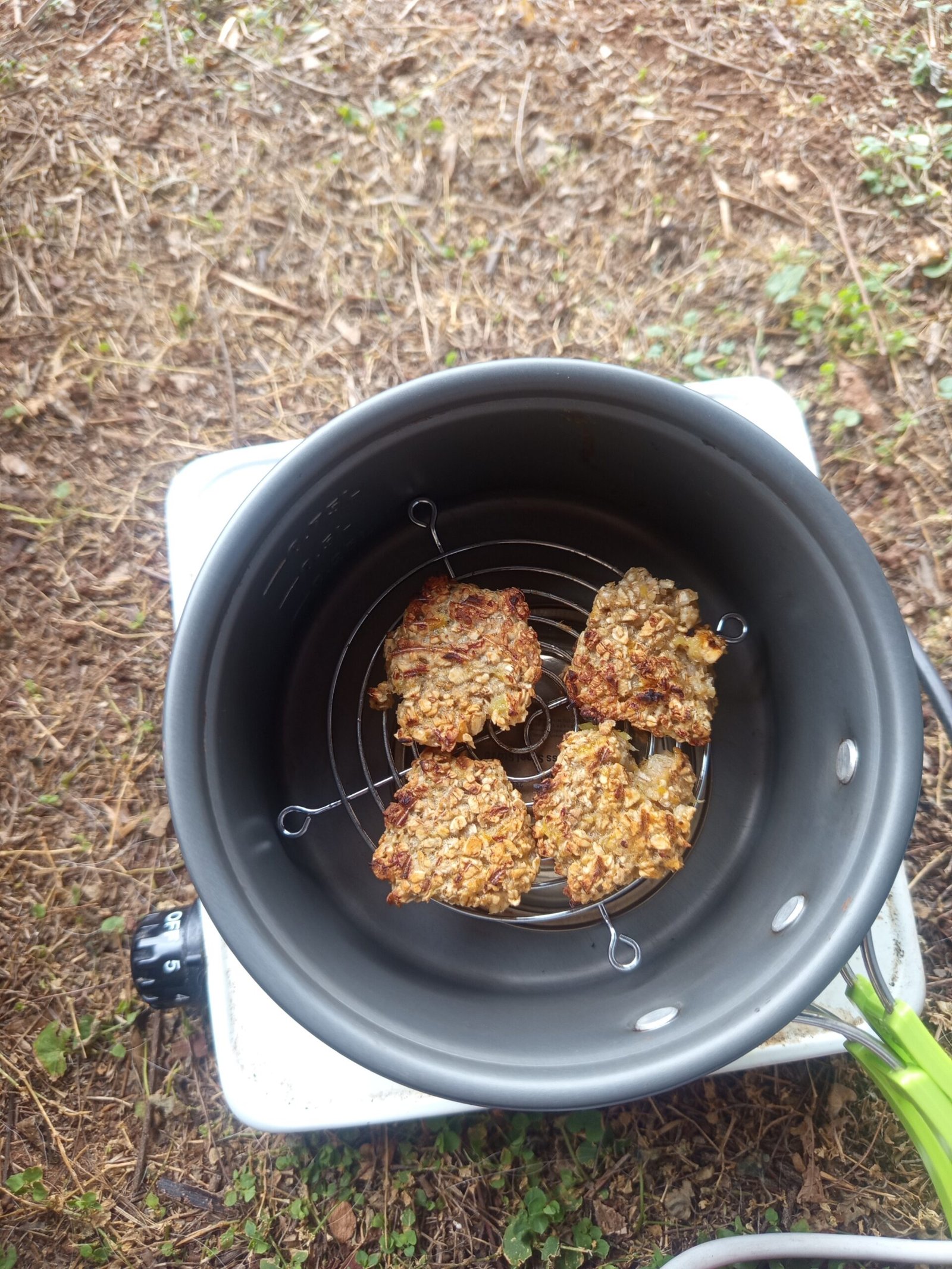
For my first attempt, I wanted to keep things simple. I had a banana and some oats, and I just wanted to see whether it would work.
Ingredients
- 1 ripe banana
- Oats as needed
Method
- Mash the banana thoroughly with a fork.
- Add the oats and mix until you have a dough-like mixture that holds together.
- Shape the mixture into small cookies of roughly equal thickness.
- Place the cookies on a suitable rack, or use a suitable baking tin positioned on the raised support.
That’s all you need for this simple version. The banana provides sweetness and helps bind the oats together. Making the cookies relatively thin and evenly sized also makes it easier to check when they are done.
How I Baked Them
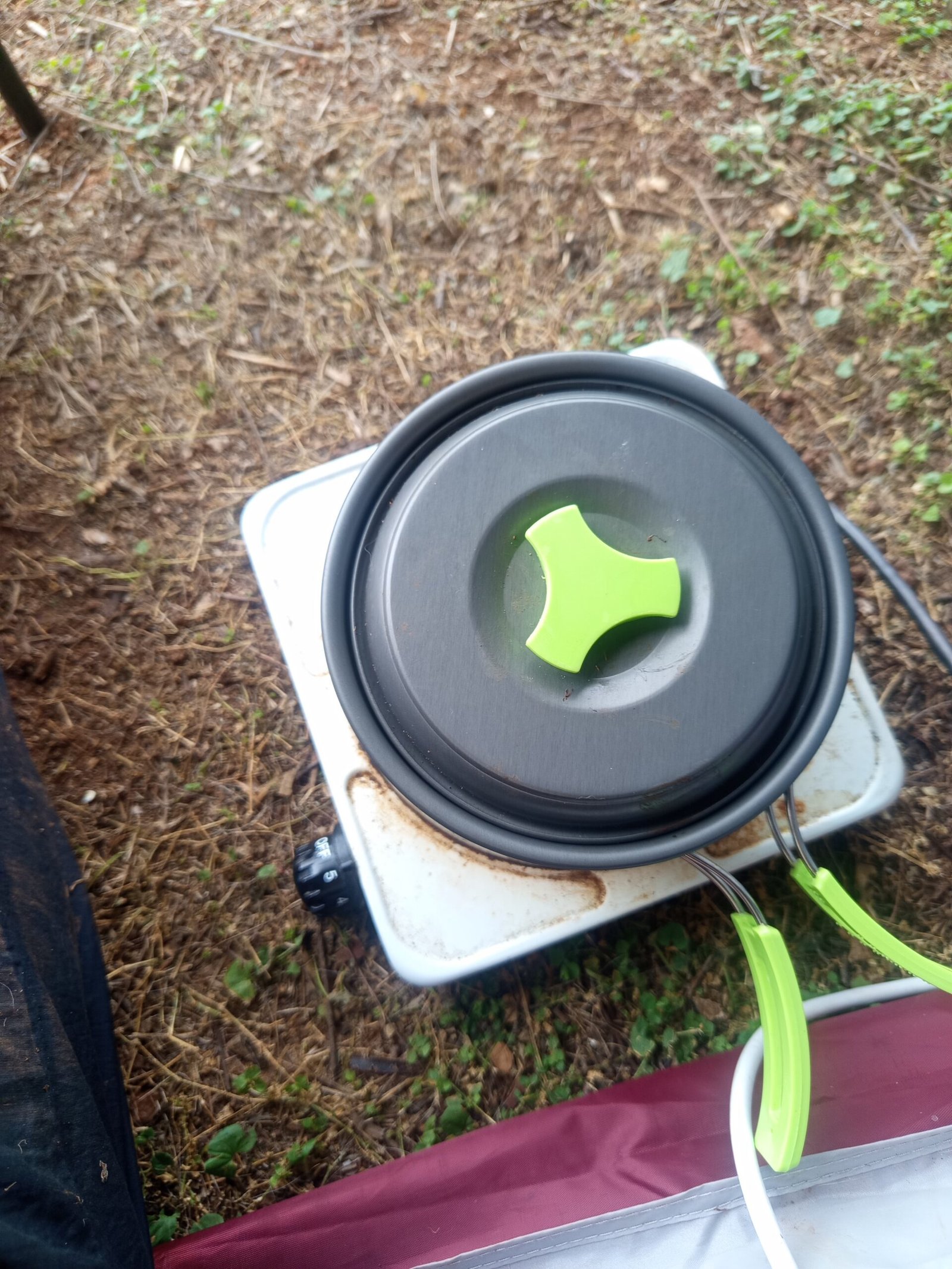
I preheated my improvised oven for about five minutes on my electric camping hot plate. I had it set to the highest setting.
Then I placed the cookies on the rack and put the lid on the pot.
After about ten minutes, I checked on them for the first time. Since most of the heat comes from below, I turned the cookies over so the other side could brown as well.
The baking time depends on the heat source, temperature, pot, lid and thickness of the cookies. My ten minutes are simply what happened during my own experiment, not a fixed baking time for every setup.
I want to experiment with the heat settings next time. An electric hot plate can make the bottom of the pot extremely hot, so I would monitor the temperature more carefully and turn it down if necessary. The pot should never be left unattended while baking.
And the Result?
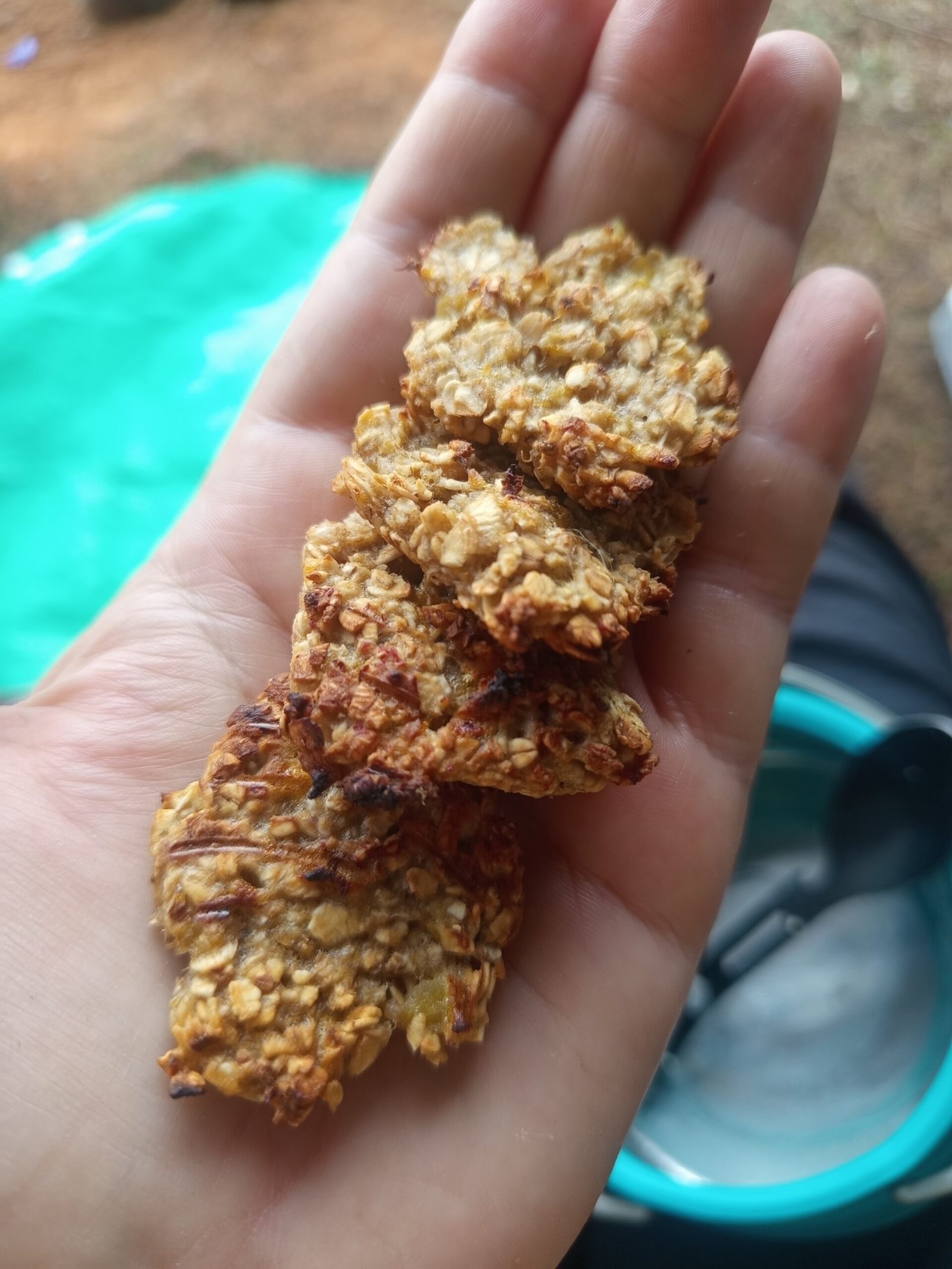
For a first attempt, I was honestly amazed! The cookies were not browned evenly everywhere, but my experiment worked. And that was the whole point: to try something, learn from it and create something new with simple equipment.
I will definitely be experimenting more.
Other Ways to Bake Without an Oven
My method is just one possibility. If you enjoy camping or travelling for longer periods, there are several ways to experiment with baking using simple equipment.
1. Baking in a Camping Pot with a Raised Support
This is the method I tried. A pot with a lid and a stable raised support are the basic ingredients. Whether you use a rack, an upside-down metal bowl, a suitable metal tin or a smaller metal pot depends on what you have available.
The food can sit on the rack or inside a suitable baking tin placed on the support. The key is to prevent the food or baking tin from resting directly on the hot bottom of the pot.
2. Baking with Sand
This is something I would like to try myself.
A layer of completely dry sand can act as a heat reservoir. You need a sufficiently large, heat-resistant pot and a suitable support that holds the baking tin securely above the sand.
The baking tin must be positioned so that sand cannot get into the food, and the whole setup must be stable. Damp sand should not be used, as trapped moisture can cause problems when heated. As with any improvised method, the heat needs to be controlled carefully.
I had considered placing newspaper on top of the sand to protect the food. However, I would not recommend using newspaper inside a heated pot. It can scorch or catch fire, and printing inks are not intended for use as a baking surface. A suitable heat-resistant liner designed for the intended use is a safer choice.
3. Baking with Salt
Coarse salt is also used as a heat reservoir in some improvised baking methods. The idea is similar to the sand method: the salt is heated inside the pot, while the baking tin rests on a suitable raised support above it. The food should not sit directly on the salt.
I would like to find out for myself whether this works better than sand. The results can depend on the setup, heat source and type of food being baked.
4. Baking in a Small Metal Tin
If you have a small baking tin that is suitable for the temperatures involved, you can place it on a raised support inside the pot. This opens up possibilities beyond cookies, including small cakes and bread.
Always use heat-resistant cookware and materials. Plastic parts, unknown coatings and random containers are not automatically suitable for high temperatures.
5. Using a Purpose-Built Camping Oven or Dutch Oven
There are also purpose-built camping ovens and Dutch ovens. These can be a more convenient option for anyone who wants to bake regularly while camping.
But as a backpacker, I find it particularly interesting to discover what I can achieve with the equipment I already carry, without buying and transporting extra gear.
What I Want to Try Next
I want to keep experimenting and find out what else is possible with my small camping setup. Perhaps I will try:
- Oat cookies with cinnamon
- Small vegan apple cakes
- Simple flatbreads or small loaves of bread
- A small cake baked inside the camping pot
- The sand or salt method as a heat reservoir
I want to learn how to regulate the heat more effectively and discover which setup produces the most even results.
My first experiment reminded me of something important: you don’t always have to buy something new. Sometimes all you need to do is look at the things you already own in a different way.
I’m looking forward to finding out what comes out of my improvised camping oven next!
Perhaps this little experiment will inspire someone else to try something new, too. When you’re travelling, things can be simple – and sometimes a little improvised.
Safety note: Pots and their contents can become extremely hot when baking on an electric hot plate, gas stove or open fire. Use only suitable heat-resistant materials, ensure the setup is stable and never leave it unattended. When using an open fire, keep it well away from your tent, tarp and other flammable materials.