What would happen if you stopped using money?
Not for a weekend. Not as an experiment for a few days. But for years.
In a world where almost everything seems to have a price, the idea sounds almost impossible. We need money for food, housing, transportation, electricity, clothing and countless other things.
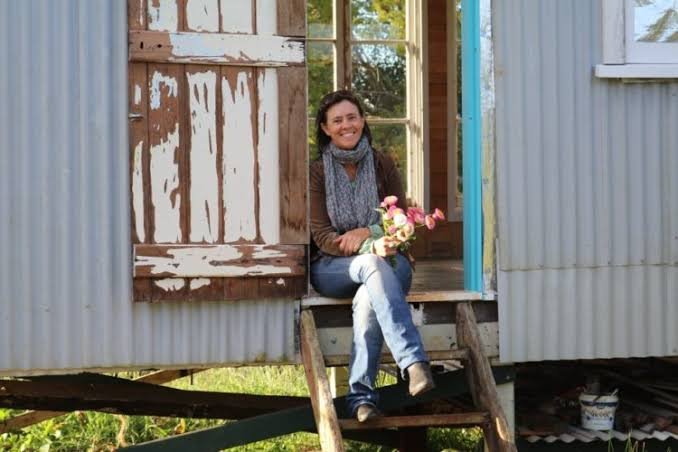
Australian Jo Nemeth decided to challenge exactly that assumption.
She wanted to find out whether it was possible to build a life in which money was no longer the centre of everything.
Leaving the Money Economy Behind
Jo Nemeth had a conventional working life before making her decision. She had a job, earned money and participated in the same economic system as everyone else.
Then she began asking herself a simple but surprisingly radical question:
Do we really need money for everything we need in life?
Instead of simply thinking about the question, she decided to test it.
She left her job, gave away her money and closed her bank account. Her experiment was not about becoming wealthy or finding a clever way to avoid working.
It was about discovering whether people could exchange something other than money.
Living Without Money Does Not Mean Living Without Work
This is one of the most important things to understand about Jo Nemeth’s lifestyle.
Living without money does not mean doing nothing.
Quite the opposite.
Jo used her time, knowledge and practical abilities instead of paying for everything with cash. She gardened, cooked, repaired things, helped other people and contributed wherever she could.
In return, she might receive food, somewhere to stay, useful objects, transport, help or simply the opportunity to become part of a community.
Her most important resources were no longer sitting in a bank account.
They were her time, skills, labour and relationships.
The Gift Economy
Jo Nemeth’s way of living is closely connected to the idea of a gift economy.
A gift economy works differently from the normal financial system. Instead of every exchange being measured in money, people give what they can and receive what they need.
Sometimes that looks like barter. Someone helps repair a fence and receives vegetables. Someone cooks a meal and another person helps with a different task.
But it does not always have to be a direct exchange.
You might help someone today without receiving anything immediately. Months later, someone else might help you when you need it.
The value is not necessarily measured by an exact transaction.
It is built on trust, relationships and reciprocity.
Skills Can Become a Kind of Currency
When money disappears from everyday life, you suddenly begin looking differently at the things you can do.
Can you cook?
Can you grow vegetables?
Can you repair something?
Can you look after animals?
Can you clean, build, teach, organise or simply give someone your time?
All of these abilities have value.
In a conventional economy, that value is often converted into money through employment. Jo Nemeth explored what happens when the conversion into money is removed.
Your skills remain.
Your time remains.
Your usefulness remains.
Only the measuring system changes.
A Different Relationship With Possessions
Living without money also changes the way you look at possessions.
If you cannot simply go into a shop and buy something whenever you want, you start asking different questions.
Do I really need this?
Can I repair what I already have?
Can I borrow it?
Can somebody else use one while I use another?
Could I make it myself?
Could something that somebody else no longer needs be useful to me?
This is a very different form of minimalism.
It is not necessarily about owning as little as possible because minimalism looks beautiful in photographs.
It is about reducing your dependence on buying things.
Food Without a Supermarket
Food is one of the biggest challenges when living without money.
Yet food can also be one of the areas where alternative systems become particularly visible.
Gardening, growing vegetables, sharing meals, receiving surplus food and exchanging practical work can all reduce the need for cash.
Someone may have more vegetables than they can eat.
Another person may have time and energy to help in a garden.
Someone else may know how to cook.
None of these things necessarily requires a supermarket transaction.
They require cooperation.
Home Does Not Have to Mean Owning a House
Another assumption Jo’s lifestyle challenges is the idea that having a home automatically means renting or owning a conventional house.
Alternative living can involve very different forms of accommodation: staying with friends, using simple spaces, living in small structures, staying in gardens or finding temporary arrangements within a community.
The important question becomes less about “How much rent can I afford?” and more about “What do I actually need in order to live safely and comfortably?”
That is a surprisingly powerful question.
Time Becomes More Valuable
Money is not the only thing that changes when you leave the conventional economy.
Your relationship with time changes too.
In a normal job, time is often exchanged directly for money.
You work for eight hours and receive a salary.
Jo’s experiment asks what happens when time is no longer primarily something that has to be converted into a wage.
Work can become something much broader.
Growing food is work.
Cooking is work.
Repairing something is work.
Helping another person is work.
Looking after a garden is work.
But these activities are also simply part of life.
The boundary between work and living becomes much less clear.
But Is a Moneyless Life Really Independent?
This is where Jo Nemeth’s story becomes especially interesting.
Living without money may sound like the ultimate form of independence.
But in reality, it can create a different kind of dependence.
Instead of depending primarily on money, you depend more heavily on people, communities and relationships.
You need people who are willing to share.
You need places where alternative forms of exchange are possible.
You need communities where trust exists.
And you need to be willing to contribute yourself.
In that sense, Jo’s lifestyle is not really about living completely independently.
It is about replacing financial dependence with social cooperation.
What About Healthcare and Modern Infrastructure?
Of course, there are limits.
Modern society is built around money, and some things are extremely difficult to obtain without it.
Healthcare, official documents, long-distance transportation, technology, emergency services and many other necessities are connected to financial systems.
That means a completely moneyless existence can be extremely difficult, particularly for people without strong social networks or practical resources.
Jo Nemeth’s experience therefore should not necessarily be understood as a universal recipe.
It is better understood as a question:
How much of our lives actually needs to depend on money?
The Hidden Wealth of a Simple Life
Jo’s experiment also challenges the usual definition of wealth.
We normally measure wealth through income, savings, property and possessions.
But there are other forms of wealth.
A garden is wealth.
Knowing how to grow food is wealth.
Knowing how to repair things is wealth.
Having people you can trust is wealth.
Being able to help others is wealth.
Having time is wealth.
Knowing how to live with very little can also be a form of wealth.
Could We All Live Without Money?
Probably not completely.
And that is not necessarily the point.
Jo Nemeth’s story is interesting because it makes us question something that normally seems unquestionable.
Money is extremely useful. It allows millions of people who do not know each other to exchange goods and services quickly.
But it is not the only way human beings have ever organised their lives.
Long before modern banking systems, people relied on family networks, communities, shared resources, hospitality, mutual assistance, bartering and gifts.
Jo’s experiment brings some of those principles into a modern world.
What We Can Learn From Jo Nemeth
You do not have to close your bank account to learn something from her experiment.
You could start much smaller.
- Repair something instead of replacing it.
- Borrow something instead of buying it.
- Share tools with neighbours or friends.
- Grow some of your own food.
- Cook for someone who helps you.
- Offer your skills instead of immediately offering money.
- Give away things you no longer need.
- Accept help without feeling that everything has to be financially balanced.
- Spend less by discovering what you actually need.
None of these things requires abandoning modern life.
They simply remind us that money is only one way of creating value.
The Real Question Behind Jo Nemeth’s Experiment
Perhaps the most fascinating part of Jo Nemeth’s story is not the fact that she lived without money.
It is the question underneath it.
What if a good life is not primarily about earning more?
What if freedom can sometimes come from needing less?
What if the things we already know, the skills we already have, the people around us and the time we give each other are worth much more than we normally realise?
Jo Nemeth did not prove that money is unnecessary for everyone.
She demonstrated something more interesting:
There are more ways to live than the one most of us have been taught.
Frequently Asked Questions About Jo Nemeth
Who is Jo Nemeth?
Jo Nemeth is an Australian who became known for experimenting with living without conventional money. She explored alternative ways of meeting her needs through skills, work, sharing, community and a gift-based economy.
Did Jo Nemeth really live without money?
Yes. Her experiment involved stepping away from conventional financial transactions and finding other ways to obtain food, accommodation and everyday necessities.
How did Jo Nemeth get food?
Her lifestyle involved activities such as gardening, sharing, cooking and contributing practical work within communities rather than relying primarily on purchasing food with money.
Did living without money mean that Jo Nemeth did not work?
No. Her experience demonstrates the opposite. She continued to work and contribute, but her work was not necessarily converted into a conventional monetary wage.
What is a gift economy?
A gift economy is a system in which people exchange goods, skills, time and support without every exchange being reduced to a direct monetary transaction. Giving, sharing and mutual support are central to the system.
Can anyone live without money?
There is no simple answer. A completely moneyless lifestyle can be difficult because modern society depends heavily on money. However, reducing dependence on money through sharing, repairing, growing food, exchanging skills and community support is possible for many people.
Sources and Further Reading
Jo Nemeth’s experience has been documented by ABC News Australia, including reports about her decision to live without conventional money and the practical realities of her lifestyle.
ABC News Australia:
Jo has lived without money for five years
ABC News Australia:
Living without money