The Man Who Never Saw His City
How Keetmanshoop Got Its Name
A Hamburg merchant’s son, a banking house in Elberfeld, a mission on the other side of the world – and a city in the desert that bears a name its namesake never saw in person.
When I stood in Keetmanshoop, in the shadow of the old mission church, one question in particular wouldn’t let me go: Who was this Keetman, really – and why does an entire city in the desert of southern Africa bear his name, even though he never came here himself? I followed this question, and the answer leads me back to Hamburg, to a banking house in Elberfeld, and to the beginnings of the German missionary movement in the 19th century.
If these stories mean something to you
The Oddity Expedition is written slowly — somewhere between dusty roads, long bus rides, forgotten border towns and the quiet moments in between.
If a story stayed with you, you can help keep this journey alive.
☕ Support the journeyWho Was Johann Keetman?
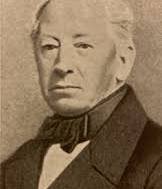
Johann Keetman was born on November 29, 1793 in Hamburg – some older sources incorrectly give 1796 – and died on October 10, 1865 in Elberfeld, in what is now Wuppertal. He was the eldest son of Johann Keetman senior, who had been a partner in a Hamburg trading and shipping company until the business was dissolved. The family can be traced back even further: the genealogy reaches back to the 16th century in the Dutch city of Edam, where the Keetmans lived as salt boilers in respectable bourgeois circumstances – from salt boiling on the IJsselmeer to the desert city in Namibia is, in retrospect, a remarkably wide arc.
Keetman received his commercial training in Frankfurt and Barmen. Around 1820, he settled in Elberfeld with his family and became a merchant there. Three years later, he married Wilhelmine Wichelhaus, the daughter of his future business partner, and joined his father-in-law’s banking house as a banker – the bank J. Wichelhaus P. Sohn. Elberfeld thus became his home for the rest of his life.
Keetman was far more than just a banker. He sat on the Elberfeld city council, was a member of the commercial court, chairman of the board of trustees of the municipal orphanage, and an elder of his Reformed congregation. A man, then, deeply embedded in the civic, economic, and ecclesiastical life of his city – not the type of adventurer or colonial pioneer one might perhaps associate with the name of a desert city.
From Banker to President of the Mission
The decisive part of his life for our story began in 1828: that year, Keetman became director of the newly founded Rhenish Missionary Society, which had emerged from the merger of the Protestant mission associations of Elberfeld, Barmen, and Cologne. He was thus one of its founding figures and its first president. In 1843, he officially took over its chairmanship and remained one of the central figures of the society until his death – responsible, among other things, for communication with the missionaries sent out around the world.
Keetman was particularly committed to missionary work in what is now Namibia, which at the time was not yet a German colony and was only annexed decades later as “German South-West Africa.” From 1857 onward, the conviction matured within the Rhenish Missionary Society that the – as the missionaries themselves put it – “starving souls” in the southwest of Africa urgently needed their own mission station. Keetman was significantly involved in the search for a location, donated the sum for the land purchase himself, and through further contributions also enabled the acquisition of adjacent areas for the expansion of the future station.
He didn’t search for the place himself – he financed it. That is the actual core of this story.
A Timeline: From the Bank in Elberfeld to the City in the Desert
What this timeline doesn’t directly show: Keetman died in 1865 – a year before the station that was to bear his name was even founded. When missionary Schröder arrived in ǂNū-ǂgoaes on April 14, 1866, to establish the station, his most important patron was already dead. The naming after Keetman was a retrospective act of gratitude by the missionaries for his decades of crucial financial and organizational support – “Keetmans Hoop,” Keetman’s Hope, in Afrikaans. So he not only never saw the city, he probably didn’t even know it would one day bear his name.
What Else Remains of His Name
Keetmanshoop is not the only place that commemorates the early work of the Rhenish Missionary Society and Johann Keetman. About 200 kilometers north of Cape Town lies the settlement of Wupperthal to this day – named after the river on which the missionary society had its headquarters. The early history of Windhoek, today’s capital of Namibia, is also linked to this circle through missionary work.
A particularly unexpected footnote to the family history: Keetman’s son Daniel August Keetman (1837–1918) also entered the family banking house and was the grandfather of Gunild Keetman – a German composer and music educator of the 20th century, known above all as a close associate of Carl Orff and co-developer of the so-called Orff Schulwerk, a method of music education still widely used around the world today. From a mission station in the Namibian desert to music lessons in kindergartens around the world – a family name that lives on on very different continents and in very different contexts.
In Closing
What occupies me most about this story is exactly what had already struck me in the museum: Johann Keetman never felt the heat of this semi-desert, never saw the camel thorn tree around which a church was later built, never saw the red spoked wheels of the old wagons that now stand under a roof next to that church. He sat in a banking house in Elberfeld, thousands of kilometers away, signing donations and resolutions – and yet an entire city on the edge of the Namib Desert bears his name to this day. Sometimes, it seems to me, the most enduring traces are not created by presence, but by what someone enables from afar – for better and, as this colonial history as a whole shows, also for worse.