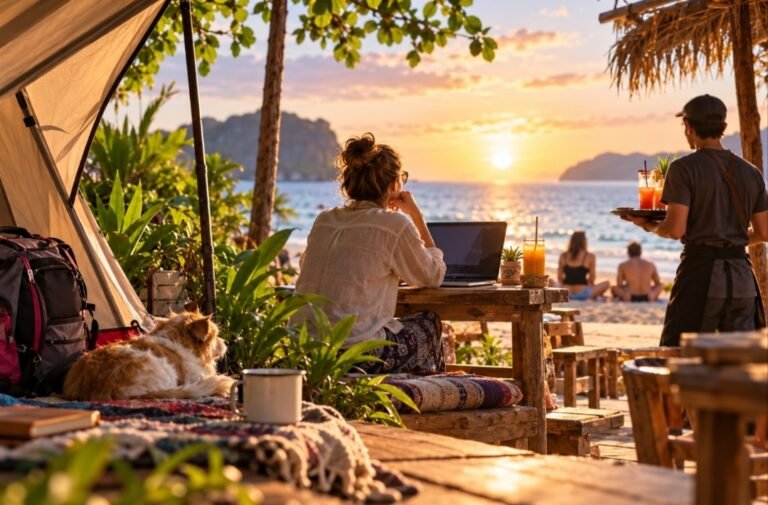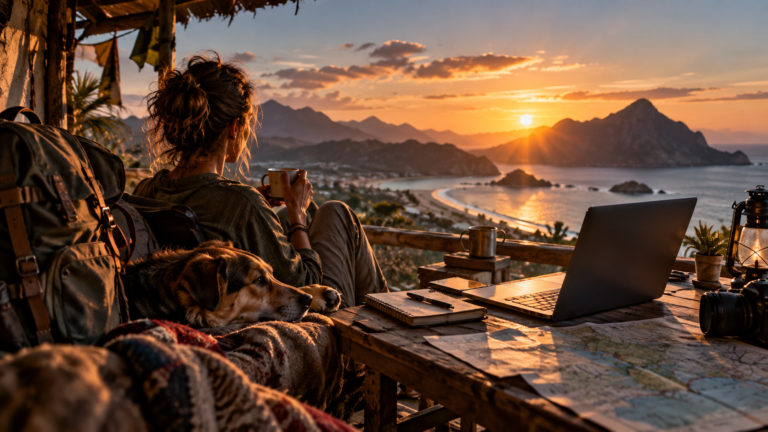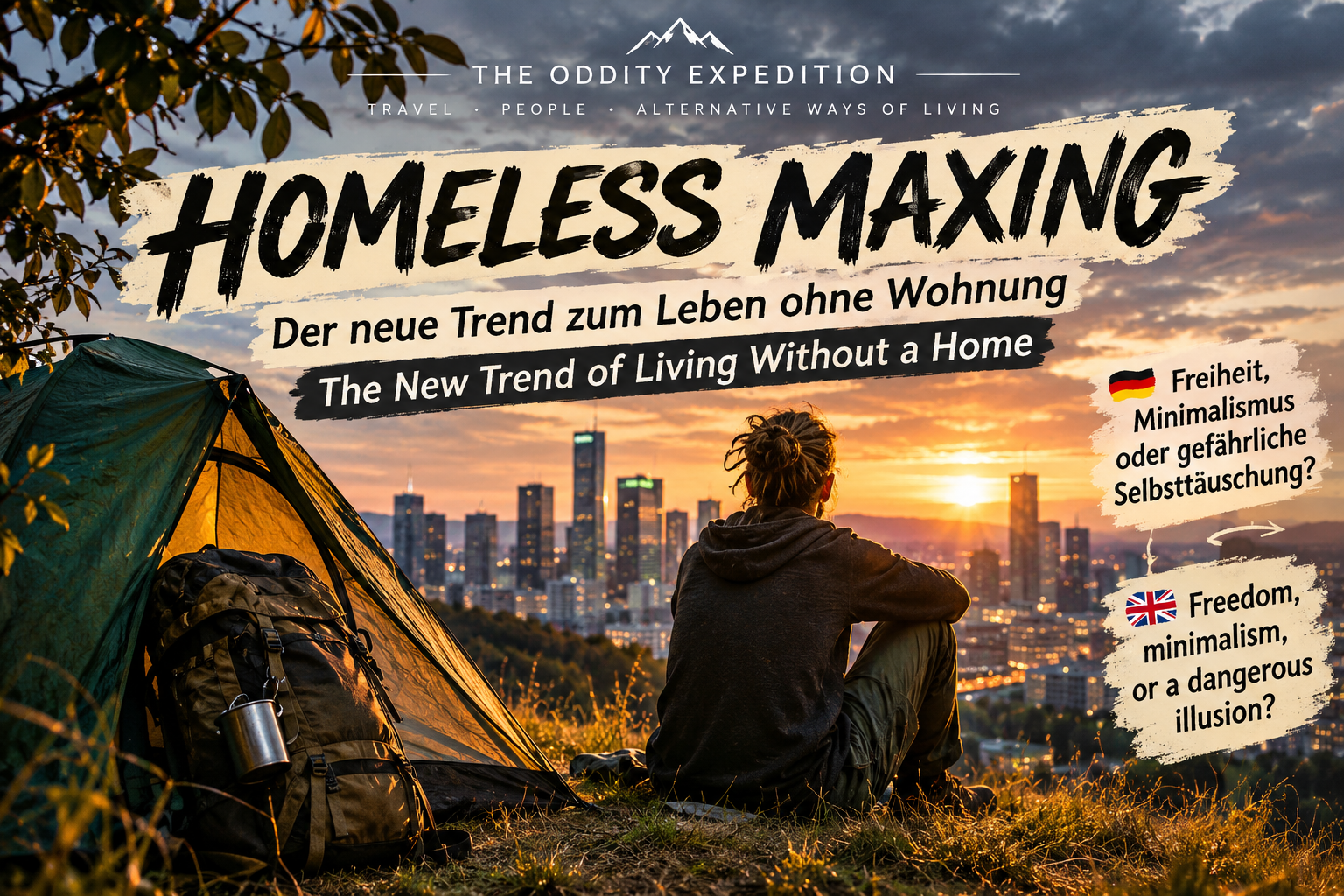
A tent instead of an apartment. A backpack instead of a wardrobe. Public showers instead of a private bathroom. Homeless Maxxing sounds like an internet joke, but a growing number of online creators are documenting a lifestyle that challenges almost everything we associate with modern living. Is it radical minimalism, a new form of freedom, or a dangerous romanticization of homelessness?
For generations, having a home has been one of life’s biggest goals. A comfortable apartment, a secure place to sleep, a kitchen, a bathroom and somewhere to keep all the things we accumulate over the years.
But what happens when someone decides they no longer want any of that?
Welcome to the unusual world of Homeless Maxxing.
Instead of paying rent, maintaining a household and filling their homes with possessions, some people deliberately experiment with living without a conventional place to stay. They sleep in cars, tents or temporary locations. They use gyms for showers, public facilities for everyday needs and carry much of their lives in a backpack.
And they document it online.
What initially sounds like an extreme lifestyle challenge raises some surprisingly interesting questions.
How much do we actually need? How expensive is a normal life? Does having an apartment automatically mean having a home? And why are some people beginning to see the absence of a permanent home as a form of freedom?
There is more to this internet phenomenon than simply sleeping outside.
What Does Homeless Maxxing Actually Mean?
The term Homeless Maxxing combines two words:
- Homeless: Having no permanent home or conventional place of residence.
- Maxxing: Internet slang derived from maximizing – pushing something to its limits or optimizing it as much as possible.
Homeless Maxxing describes a lifestyle or experiment in which people deliberately live without conventional housing or reduce their living arrangements to an absolute minimum.
Common elements include:
- Owning as few possessions as possible.
- Living out of a backpack or a small collection of belongings.
- Sleeping in a car, tent or temporary locations.
- Reducing monthly expenses.
- Using public infrastructure instead of private facilities.
- Avoiding traditional rental agreements.
- Organizing everyday life with minimal resources.
However, Homeless Maxxing is not a formally defined lifestyle movement, nor is it a recognized social or academic category. It is primarily an internet expression used in online communities and social media content.
There is also an important distinction: Not everyone without a permanent home is Homeless Maxxing. And not everyone using the term is actually experiencing homelessness.
For some, it is a temporary experiment. For others, it is an attempt to build a long-term minimalist lifestyle.
The difference matters.
Why Is Homeless Maxxing Attracting Attention?
At first glance, the idea seems contradictory.
For decades, people have worked towards owning or renting a comfortable home. A permanent address has traditionally represented security, independence and stability.
Yet the financial reality has changed for many people.
Rising housing costs, expensive everyday necessities, uncertain employment and the pressure to maintain a certain standard of living have encouraged people to question traditional lifestyles.
At the same time, social media has made unconventional ways of living much more visible.
On YouTube, creators document everyday routines without a conventional home. They go to the gym, buy groceries, work, explore cities and try to organize their days as normally as possible.
One example is the video Homeless Maxing Vlog 1 – Lifting and a Grocery Run, published by the creator Solid Heaston.
The fascinating part is not necessarily homelessness itself.
It is the idea of getting by with very little, reducing financial obligations and questioning how much money is actually required to live.
Perhaps the appeal lies in a simple thought:
What if we don’t need nearly as much as we have been told we need?
Homeless Maxxing vs. Minimalism, Vanlife and Digital Nomadism
These terms are sometimes used interchangeably online, but they describe different lifestyles.
Minimalism
Minimalists deliberately reduce their possessions and focus on what they genuinely need or value.
A minimalist can live in a large apartment or a small house. The defining characteristic is not being homeless but having a conscious relationship with material possessions.
Vanlife
Vanlife involves living or travelling in a vehicle.
A converted van can provide almost everything a conventional home offers: a bed, kitchen, storage, electricity and sometimes even a shower.
It is a mobile home rather than necessarily a homeless lifestyle.
Digital Nomadism
Digital nomads work remotely and move between different locations.
They may stay in hotels, apartments, hostels, guesthouses or campsites. Their defining characteristic is location-independent work rather than living without housing.
Backpacking
Backpackers travel with relatively little luggage, often using public transport and inexpensive accommodation.
They may stay in hostels, campsites or budget guesthouses. Although they frequently sacrifice comfort, they usually have somewhere planned to sleep.
Homeless Maxxing
Homeless Maxxing puts the absence of conventional housing at the centre of the experiment.
It can involve sleeping in a vehicle, tent or temporary location and finding ways to manage everyday life without a permanent home.
| Lifestyle | Conventional home | Main idea |
|---|---|---|
| Minimalism | Usually possible | Owning less |
| Vanlife | Not necessarily | Living in a mobile home |
| Digital Nomad | Not necessarily | Working from anywhere |
| Backpacking | Not necessarily | Travelling with little luggage |
| Homeless Maxxing | Often absent | Living without conventional housing |
The boundaries are not always clear. What matters is understanding how someone actually lives rather than simply looking at the label.
How Does Homeless Maxxing Work in Everyday Life?
Social media tends to show the unusual moments. But the real challenge lies in ordinary daily activities.
A home provides infrastructure that most people rarely think about.
A bathroom, a kitchen, a refrigerator, a washing machine, a safe place to sleep and somewhere to leave personal belongings.
Without those things, everyday life requires a different kind of organization.
1. Where Do Homeless Maxxers Sleep?
Depending on their circumstances, people may use:
- Cars.
- Tents.
- Legal campsites.
- Hostels and inexpensive accommodation.
- Friends’ homes.
- Other permitted temporary sleeping arrangements.
Not all locations are legal or safe everywhere. Rules regarding sleeping in vehicles, camping in public spaces and wild camping vary considerably between countries and regions.
A tent provides some protection from the weather, but it does not automatically provide security.
A vehicle can offer additional protection, but comes with costs such as insurance, maintenance, fuel and repairs.
2. How Do They Shower and Maintain Personal Hygiene?
One of the most frequently asked questions is how people manage without a private bathroom.
Possible solutions include:
- Gym memberships with shower facilities.
- Public swimming pools.
- Campsites.
- Hostels.
- Public shower facilities.
- Friends’ homes.
These options are not necessarily free.
A gym membership or regular campsite fees can become a significant part of someone’s monthly budget.
3. Where Do They Get Food?
Without a kitchen, preparing meals becomes more complicated.
Some people buy inexpensive groceries, prepare simple meals or use communal kitchens where available.
Food hygiene, storage and access to clean drinking water become particularly important when living without refrigeration or cooking facilities.
A small camping stove can help, but it is not suitable or permitted everywhere.
4. How Do They Work?
This depends entirely on the individual.
Some people work online, others have conventional jobs. Some rely on savings, while others combine several sources of income.
However, living without a conventional home does not automatically mean having fewer expenses.
A laptop needs electricity. Mobile internet costs money. A secure place to work has to be found.
Even seemingly simple tasks can require considerable planning.
5. Where Do They Keep Their Belongings?
Owning less also means needing less storage.
Some people carry everything in a backpack. Others use lockers, storage facilities or leave certain belongings with friends.
The challenge is not simply owning fewer things.
Every possession must be protected, transported, organized and sometimes replaced.
Is Homeless Maxxing Really Cheaper Than Renting an Apartment?
This is probably one of the most interesting questions.
After all, someone who does not pay rent should theoretically save a considerable amount of money.
But it is not quite that simple.
Living without conventional housing can involve numerous expenses:
- Campsite fees and temporary accommodation.
- Gym memberships and shower facilities.
- Food and drinking water.
- Public transport or vehicle expenses.
- Mobile data and electricity.
- Laundry and personal hygiene.
- Storage facilities.
- Replacement equipment.
- Unexpected emergencies.
There is another important consideration: An apartment provides a certain degree of financial and practical predictability.
Without a permanent place to stay, even small problems can become expensive.
A damaged sleeping bag, several days of heavy rain, an illness or losing access to a safe sleeping location can disrupt an entire routine.
Homeless Maxxing is therefore not automatically a money-saving strategy.
It may be cheaper under certain circumstances, but it can also create additional financial pressure.
Is Homeless Maxxing Voluntary Homelessness?
This is where the subject becomes particularly sensitive.
There is a significant difference between voluntarily giving up certain comforts and being unable to afford a safe place to live.
Someone with savings, an income, a passport, a smartphone, supportive friends and the ability to book accommodation whenever necessary is in a very different situation from someone who cannot find housing and has no financial resources.
From the outside, the two situations may sometimes look similar.
In reality, their circumstances can be completely different.
People experiencing involuntary homelessness often face challenges that lifestyle videos rarely capture:
- Limited access to healthcare.
- Discrimination and social exclusion.
- Violence and theft.
- Sleep deprivation and health problems.
- Lack of privacy.
- Difficulties finding employment.
- Administrative and bureaucratic barriers.
- Uncertainty about the future.
Academic research into homelessness on social media also highlights how people experiencing homelessness use platforms such as TikTok and YouTube to share their everyday experiences and challenge common stereotypes.
These personal accounts can reveal a much more complex reality than the simplified images often presented in online content.
Choosing to give up comfort is not the same as having no choice but to live without it.
That distinction should never disappear when discussing Homeless Maxxing.
Why Would Anyone Choose to Live Without a Home?
There are several possible motivations.
Freedom Instead of Financial Obligations
An apartment provides security, but it also comes with responsibilities.
Rent, utilities, contracts, repairs, furniture and the ongoing costs of maintaining a household.
Some people see these obligations as a burden and want a more flexible lifestyle.
Working Less
The idea is relatively straightforward.
If someone spends less money on housing, they may need less income to cover their basic expenses.
In theory, this could mean working fewer hours and having more time for personal interests.
However, this only works if other living expenses remain manageable.
Consumerism and Material Possessions
Many people question why they constantly need to earn more money to afford more things.
A larger apartment, new furniture, another car, more clothes and the latest technology.
In this context, Homeless Maxxing can be interpreted as an extreme alternative to consumer culture.
Adventure and Independence
For some people, it is a personal challenge.
How little do you actually need to organize your daily life?
Can you live comfortably with only a handful of possessions?
How well can you adapt to changing conditions?
And how much security is really provided by the things we own?
Rejecting Conventional Expectations
Not everyone wants to follow the same path.
A permanent home, a conventional career, a mortgage and a predictable daily routine are not necessarily everyone’s idea of a fulfilling life.
Some people simply want to experiment with alternatives without constantly having to justify their choices.
That does not mean traditional lifestyles are wrong.
It simply means that one model of living does not have to work for everyone.
The Dark Side: What Social Media Often Doesn’t Show
A tent at sunset can look romantic.
A video about buying inexpensive groceries can be entertaining. A gym visit without owning an apartment might even appear surprisingly appealing.
But this is only a small part of the picture.
What happens when it rains for several days?
What if you get sick?
What if you cannot find a safe place to sleep?
What if your phone is stolen or your belongings disappear?
And what happens if you eventually need a conventional home again?
The lack of privacy can become exhausting. Constantly organizing basic everyday activities takes time and energy.
There is also the psychological burden of uncertainty.
People need more than food and somewhere to sleep. They need a degree of stability, privacy, social connection and the opportunity to retreat from the outside world.
It would therefore be misleading to present Homeless Maxxing as a simple solution to financial or social problems.
At the same time, it would be equally unfair to judge everyone who deliberately chooses a life with fewer possessions.
What matters is the actual living situation and whether the person genuinely has the freedom to make that choice.
Homeless Maxxing and the Ancient Desire for a Simpler Life
The underlying idea is not particularly new.
People have always searched for alternative ways of living.
Hippies travelled with backpacks and buses. Dropouts left cities to live in simple cabins. Backpackers explored distant countries with very little luggage. Nomadic communities have travelled across landscapes for thousands of years, long before anyone invented the term digital nomad.
The American hobos of the 1930s also provide an interesting historical comparison.
During the Great Depression, many people travelled across the United States searching for work.
Some rode freight trains, carried only a few personal belongings and organized their lives around whatever opportunities they could find.
However, it is important not to romanticize their circumstances. Many hobos were travelling out of economic necessity rather than a desire for adventure.
Their experiences were very different from those of modern lifestyle influencers.
Nevertheless, there is an interesting common thread: People had to organize their lives using whatever they could carry, find or obtain along the way.
Today, the technology is very different.
Smartphones, power banks, lightweight tents and mobile internet make certain lifestyles considerably easier than they were in the past.
But the fundamental question remains:
How much does a human being really need to live?
Is Homeless Maxxing the Same as Being a Digital Nomad?
No.
Digital nomads work independently of a specific location and often earn money online.
They can live in hotels, apartments, hostels, campervans or tents.
Homeless Maxxing, on the other hand, focuses more specifically on the absence of conventional housing.
Of course, the two lifestyles can overlap.
A digital nomad might travel with a small backpack and a tent, choosing not to maintain a permanent home.
Someone practising Homeless Maxxing might also work online.
The important distinction is not necessarily where the money comes from, but how everyday life is organized.
Can You Try Homeless Maxxing Safely?
Anyone interested in a minimalist lifestyle does not have to give up their apartment immediately.
There are much more sensible ways to discover how little you actually need.
Spend a weekend with minimal luggage. Pack only the essentials and deliberately leave unnecessary possessions behind.
Try a week of camping. Organize your everyday routine using a tent, sleeping bag and basic equipment.
Experiment with a reduced budget. Track your expenses for a month and identify which costs are genuinely necessary.
Review your possessions. Which things do you actually use? Which ones are simply taking up space?
Explore alternatives. Use public transport instead of a car, camp instead of staying in hotels and prepare simple meals instead of eating out.
The important thing is to keep these experiments safe, legal and voluntary.
If you already have a home, do not give it up impulsively just because an internet trend looks interesting.
Financial reserves, a reliable source of income and a realistic emergency plan are much more valuable than a spontaneous lifestyle decision.
A Personal Perspective: Perhaps We Don’t Need Less Home, but Less Baggage
What interests me about Homeless Maxxing is not necessarily the question of whether someone sleeps on a park bench or in a car.
It is the reason why the idea of owning almost nothing has become so fascinating to some people.
Travelling with very little changes the way you look at possessions.
At first, you pack things because you believe you might need them someday.
Eventually, you realize that some of those things are simply weight.
Not just in your backpack.
But in your mind as well.
Every possession needs to be transported, stored, maintained and sometimes replaced. The more things you own, the more things you have to think about.
That does not mean having a home is unimportant. Quite the opposite. Having a safe place to return to, somewhere to rest and somewhere to feel protected is incredibly valuable.
But perhaps we should think more often about how much of our lives we spend paying for things we do not actually need.
I do not believe everyone should live without a home. And I would never romanticize homelessness.
But I find the question behind this trend fascinating:
If we could only keep the things we genuinely need, how much would we actually have left?
Perhaps that is the more interesting side of Homeless Maxxing.
Not homelessness itself, but the possibility that a simpler life does not necessarily have to be a poorer life.
Frequently Asked Questions About Homeless Maxxing
What is Homeless Maxxing?
Homeless Maxxing is an internet term describing a lifestyle or experiment in which people deliberately live without conventional housing and try to organize their everyday lives with minimal possessions and infrastructure.
Is Homeless Maxxing a new trend?
The term and its social media visibility are relatively recent. However, alternative mobile lifestyles and living without a permanent home have existed for centuries.
Why do people practise Homeless Maxxing?
Common motivations include saving money, minimalism, personal freedom, adventure, criticism of consumer culture and questioning conventional social expectations.
Is Homeless Maxxing voluntary homelessness?
For some people, it is a voluntary lifestyle experiment. This should not be confused with involuntary homelessness, where people have no realistic opportunity to secure safe accommodation.
Where do Homeless Maxxers sleep?
Depending on their circumstances, they may sleep in cars, tents or temporary accommodation. Some alternate between campsites, hostels and private accommodation.
How do you shower without a home?
Possible options include gyms, swimming pools, campsites and public shower facilities. Availability and costs vary considerably between locations.
Is Homeless Maxxing cheaper than renting an apartment?
Not necessarily. Even without rent, people still need to pay for accommodation, hygiene, food, transport, electricity, internet and secure storage. Whether money can be saved depends on individual circumstances.
Is Homeless Maxxing dangerous?
It can involve considerable risks, including exposure to extreme weather, lack of privacy, theft, health problems and unsafe sleeping locations. The level of risk depends on the country, surroundings and individual situation.
What is the difference between Homeless Maxxing and Vanlife?
Vanlife uses a vehicle as a mobile home. Homeless Maxxing focuses on living without conventional housing and does not necessarily involve owning or using a vehicle.
Can you practise Homeless Maxxing while having a regular job?
It is possible, but requires reliable ways to work, shower, store belongings and sleep regularly. A conventional workplace can make the practical organization more difficult.
Is Homeless Maxxing a good alternative to conventional living?
There is no universal answer. A minimalist and mobile lifestyle may work for some people, while creating significant financial, social and health challenges for others. It is not a solution that suits everyone.
Final Thoughts: Freedom Is Not the Same as Homelessness
Homeless Maxxing is an unusual name for a development that touches on some very real questions of modern life.
How much do we need? How much do we spend? And how much of our lives are shaped by the expectations of society?
The trend can encourage people to rethink their relationship with possessions, money and housing.
But it can also create a misleading picture if the hardships of involuntary homelessness are ignored.
Perhaps we do not all need to leave our homes to learn something from it.
Perhaps it is enough to question our everyday habits from time to time.
Because a life with fewer possessions can feel liberating.
A life without security, however, can become a struggle.
And there is a very big difference between the two.
The world is weird. Go meet it.
Correction: An earlier version used the spelling “Homeless Maxing”. The correct internet-slang spelling is “Homeless Maxxing” – with two Xs.