Thoreau Didn’t Have a Backpack. Yet He Was One of Us.
Minimalism & Courage
If these stories mean something to you
The Oddity Expedition is written slowly — somewhere between dusty roads, long bus rides, forgotten border towns and the quiet moments in between.
If a story stayed with you, you can help keep this journey alive.
☕ Support the journey
He didn’t have a backpack, no Wi-Fi, no Instagram account. He still threw it all away, moved into the woods, and lived there for two years. In a cabin he built himself. For 28 dollars and 12 cents.
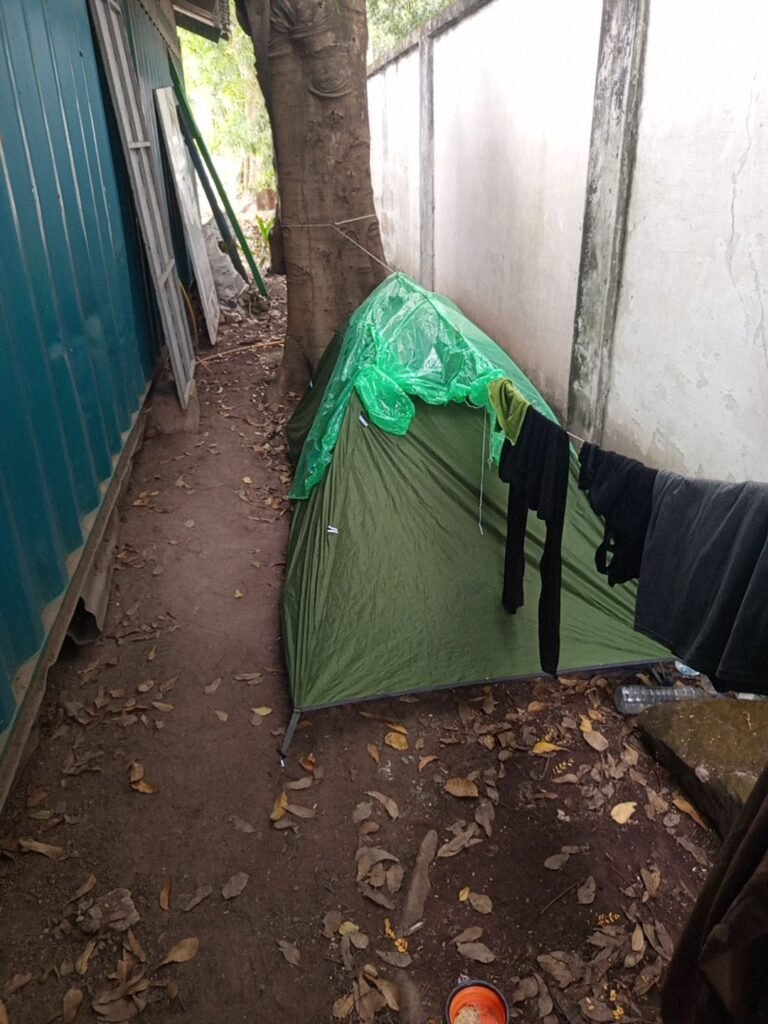
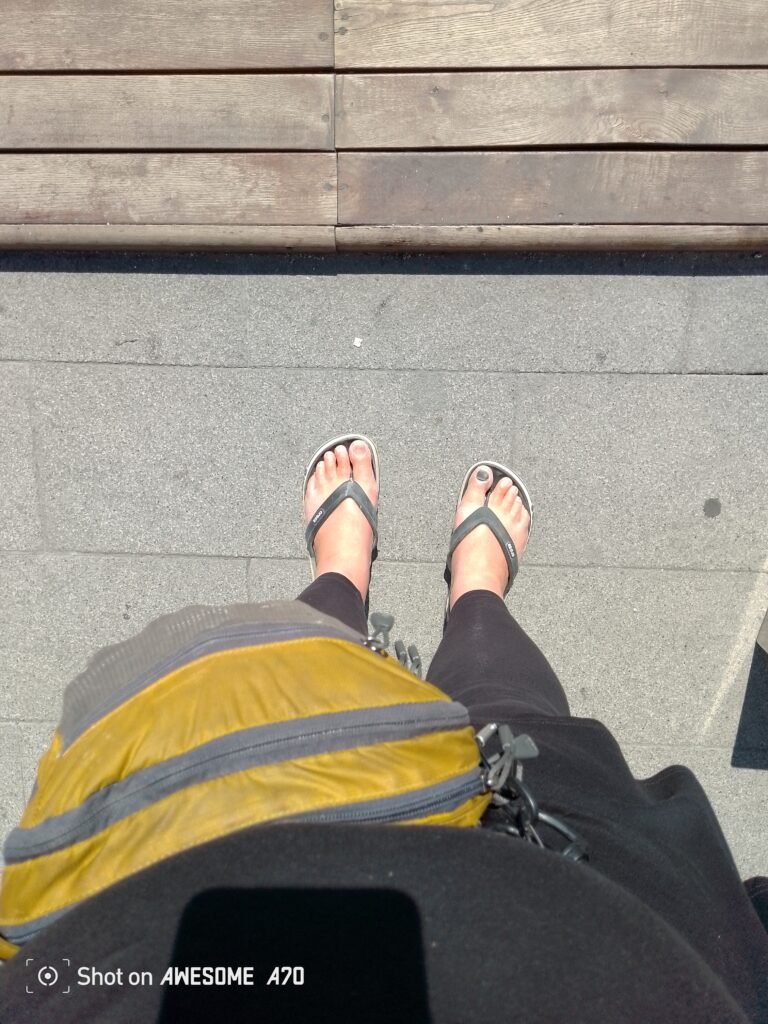
I’m Ella. I travel with two backpacks. One for everything I need. And one for everything I haven’t been able to let go of yet. (Work in progress.)
And then I come across this man named Henry David Thoreau — and I think: Yes. Exactly. He already figured it out back in 1845. Without a TED Talk, without a minimalism podcast, without a Pinterest board full of aesthetic capsule wardrobe photos.
Thoreau just did it.
And I think that’s incredibly cool.
Who was Thoreau — and why should you care?
Henry David Thoreau, born in 1817 in Concord, Massachusetts, was a writer, philosopher, naturalist — and here’s the beautiful part — absolutely not an escapist in the romantic sense. He wasn’t the type who hated the world and hid from it. He loved company. He made jokes. He visited his mother.
He was simply someone who, at some point, didn’t want to wait any longer.
Not wait for the right moment. Not wait until he had enough money, enough security, enough of a plan. He wanted to find out what a person truly needs to live — and the only way to find out was: to try it.
So he built himself a cabin. At Walden Pond, a lake in Massachusetts. The land belonged to his friend Ralph Waldo Emerson. The cabin cost him, according to his own records, 28 dollars and 12 cents. He moved in on July 4, 1845 — American Independence Day. Coincidence? I don’t think so.
He stayed two years, two months, and two days.
And wrote a book about it that today is considered one of the most influential in world literature: Walden; or, Life in the Woods.
What Thoreau had in his cabin
- A bed, a table, three chairs
- A fireplace
- A small vegetable garden (mostly beans)
- Books — including Homer in the original Greek
- A journal he wrote in daily
- Nothing he didn’t need
$28 for two years. What do we learn from this?
I’ve already calculated what I need for a week. And then again, what of that I really need. That’s an interesting experiment — I recommend it to anyone who’s packing right now and doesn’t know why their backpack is so heavy.
Thoreau calculated this for two years. And his realization was so simple it hurts:
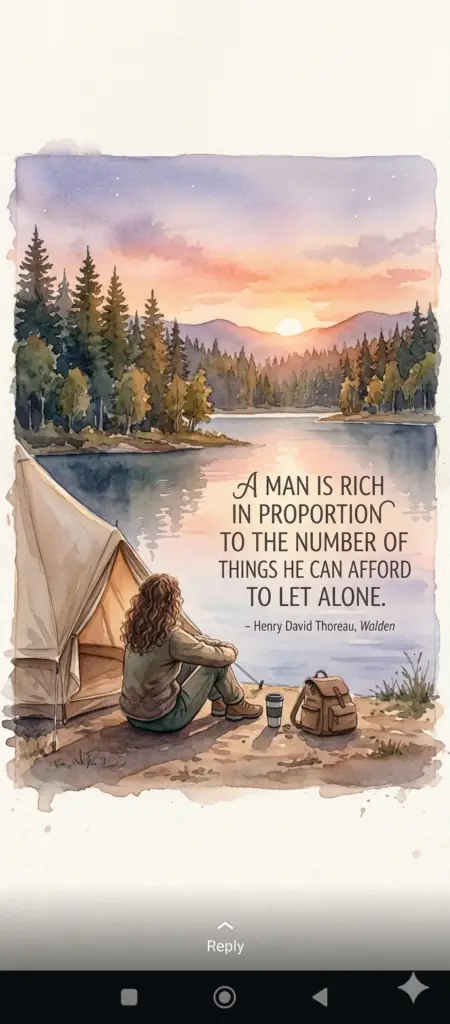
“A man is rich in proportion to the number of things he can afford to let alone.”
— Henry David Thoreau
At first, that sounds like the typical quote you see on Pinterest between two succulent photos. But Thoreau lived it. He didn’t blog about it, he didn’t put together a capsule wardrobe for 2025 — he actually stopped owning things that gave him nothing.
And what did he get instead? Time. His mind. Nature. Clarity about what matters to him.
I know that feeling. Not from a cabin in the woods, but from that moment when you set off with a backpack and realize: This is enough. That’s sufficient. I don’t need all that other stuff.
Travel is minimalism in its most practical form. Thoreau understood this 180 years before us — just without the ability to blog about it.
“I wished to live deliberately.” — What this means for us
The most famous sentence from Walden. The sentence that made me pick up the book in the first place:
“I went to the woods because I wished to live deliberately, to front only the essential facts of life — and not, when I came to die, discover that I had not lived.”
Read that sentence again. Slowly.
“Not, when I came to die, discover that I had not lived.” That’s not philosophy from a self-help book. That’s panic — honest, clear, well-written panic about a life that, in the end, wasn’t a life at all.
I believe that’s exactly why people travel. Not for the Instagram photos. Not for the passport stamps. But because when you’re on the road — with your backpack, in a foreign place, without the familiar distractions — you sometimes feel truly present for the first time.
Thoreau called it “deliberate living.” Intentional. Not automatic.
I call it: the reason I don’t stop traveling.
What Thoreau teaches us about courage — without using the word
Courage is one of those words that has become a bit worn out. Courage is the Tyrannosaurus sticker on a laptop in a café. Courage is a new haircut. Courage is the decision to stop eating meat.
Thoreau had a different idea of courage. He never called it that. He simply did it.
He lived in a time when you either became a lawyer, doctor, pastor, or merchant. That was the plan. That was the expectation. Thoreau graduated from Harvard, all doors were open — and then he said no. Not loudly. Just no.
He refused to physically punish students and therefore left teaching after just a few weeks. He didn’t pay his taxes — as political protest — and spent a night in jail for it. He wrote a book that hardly anyone bought during his lifetime, and kept writing as if that were perfectly normal.
That’s courage as I know it. Not loud. Not spectacular. Simply — continuing, even when the world is looking elsewhere.
“Men have become the tools of their tools.”
— Thoreau, Walden. And yes, he wrote that in 1854. Before the smartphone.
Thoreau & Travel: Why the backpack is the new Walden
Okay, I admit: Thoreau didn’t travel. He moved into the woods — a mile and a half from town. He barely left Concord. His expedition was inward, not outward.
And yet: What he did and what we do when we set off with a backpack — it’s the same thing in different packaging.
Both times we leave something behind. Both times we reduce to the essentials. Both times — if it goes well — we realize that what we left behind didn’t miss us as much as we thought.
Thoreau wrote: “Simplify, simplify, simplify.” That wasn’t an aesthetic statement. That was a call to action. Stop filling your life with things you don’t need. Not because possessions are evil — but because they cost time. Life time. And that’s the one thing you don’t get back.
Every time I pack and wonder: Do I really need this? — then I am Thoreau. A little bit. With better footwear.
What Thoreau would have known about traveling with little
- Less is not less. Less is freedom of movement. Less means you can change plans spontaneously.
- Possessions cost time. Every thing you carry needs attention. Even in a backpack.
- The essentials are found along the way. Not before you leave. Only when you’re gone do you realize what you need — and what you never missed.
- Freedom arises through reduction. Not through abundance. That sounds counterintuitive, but it’s true.
- You don’t need a forest. You just need the decision to stop waiting.
Why I think Thoreau is incredibly cool
I read a lot about minimalism. I know the YouTube channels, the Pinterest boards, the books with the white covers about letting go. And I like all of it — really.
But Thoreau is different. Because he didn’t write about minimalism to sell a lifestyle. He wrote to answer a question: What does a person truly need?
And the answer he found fits on a coaster: Food. Shelter. Warmth. Clothing. The rest we build in because society expects it.
That’s uncomfortable. That’s also honest.
I’m currently living with two backpacks. On the road. In countries I could barely find on a map two years ago. And the question that accompanies me through this life — What do I really need? — is the same one Thoreau asked himself in 1845.
He needed a forest for that. Sometimes I just need a bad hotel day in a city without Wi-Fi.
Same effect.
Frequently asked questions — so you don’t have to Google
What does Thoreau have to do with minimalism?
Thoreau is considered one of the early pioneers of minimalism, even though the word didn’t exist in his time. His experiment at Walden — two years with minimal possessions in a self-built cabin — was a practical answer to the question of what a person truly needs to live. His phrase “Simplify, simplify, simplify” is today one of the most famous minimalism quotes of all time.
What does a person really need to live — according to Thoreau?
Thoreau distinguished between perceived and actual basic needs. His list: food, shelter, clothing, and warmth. Everything else, he argued, we add because society expects it — not because we truly need it.
How much did Thoreau’s cabin at Walden cost?
Thoreau built his cabin at Walden Pond for exactly 28 dollars and 12 cents — including all materials. He meticulously recorded every cent in Walden. For comparison, an average monthly wage at the time was around 20–25 dollars.
What does minimalist travel mean?
Minimalist travel means focusing on the essentials — less luggage, more conscious choices, deeper experiences. It’s not about deprivation, but about shedding ballast that limits your freedom. What you don’t carry can’t slow you down.
Why is Thoreau still relevant today?
Because the questions he asked are the same as today — just packaged louder. Consumption as a substitute satisfaction. Time as the scarcest resource. The feeling of living a life that isn’t quite your own. Thoreau wrote about this in 1845. Not as much has changed since then as we’d like to believe.
Thoreau didn’t have a backpack. But he had the same thing that drives everyone who eventually stops waiting and just sets off: the conviction that life is too short to live it the way others planned for you.
That’s minimalism. That’s courage. That’s — if I’m honest — the reason I’m traveling through West Africa with two backpacks and not sitting at home wondering if I can do it.
I can. You can. Thoreau could too.
Just start.
Do you know someone who’s thinking about taking the leap?
Send them this article. Sometimes a dead philosopher from the 19th century is the best push they need.
More from the Minimalism & Courage category — because freedom isn’t an accident, it’s a decision.